Spinal Stenosis
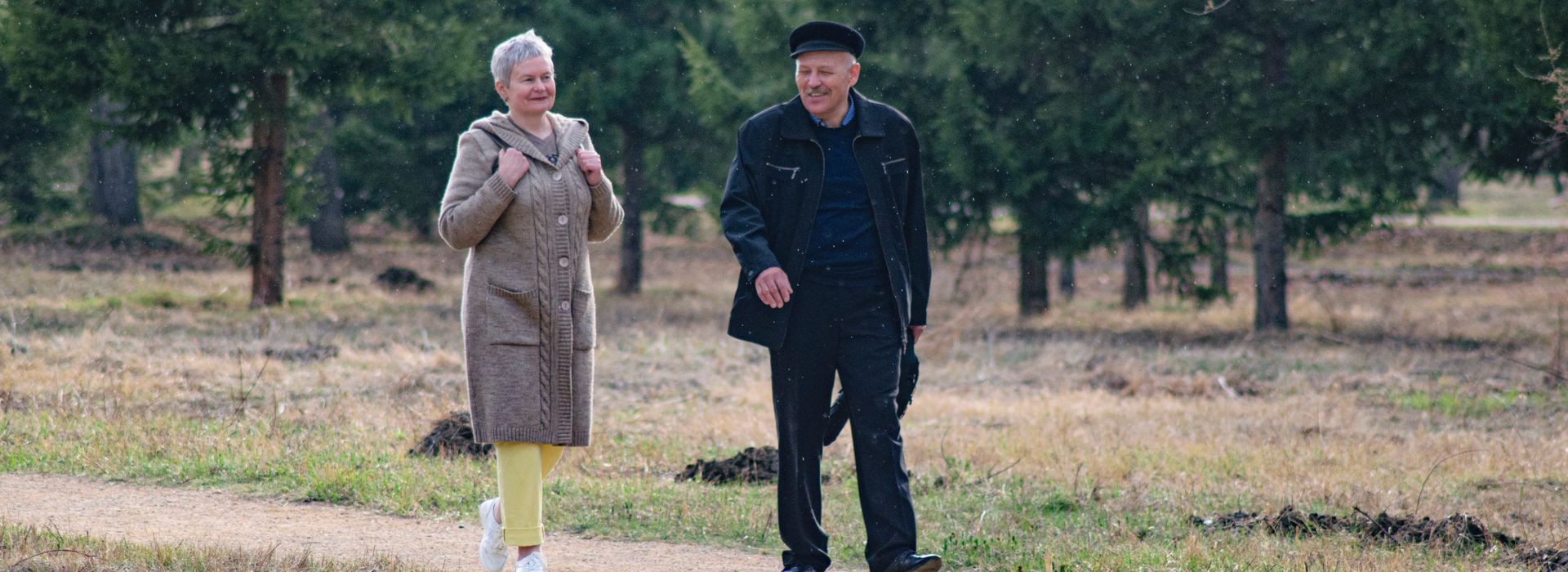
Stenosis means the space around your nerves has narrowed. It is one of the most common reasons walking gets harder after age 50.
Schedule EvaluationUnderstanding spinal stenosis.
Your spinal cord and nerves travel through a canal in the spine. Over time, arthritis, bone spurs, thickened ligaments, and bulging discs can narrow that canal and squeeze the nerves.
The classic sign is legs that grow heavy, tired, or painful as you walk, then feel better when you sit down or lean forward. Many people notice they can shop longer leaning on a cart than they can walk upright.
Common symptoms
- Leg heaviness, cramping, or pain with walking
- Relief when sitting or leaning forward
- Numbness or tingling in the legs
- Lower back pain
- Shorter and shorter walking distance
- Balance that feels less steady
What narrows the canal.
Stenosis usually develops slowly, from several changes adding up over the years.
Conditions that can be responsible
- Arthritis and bone spurs
- Thickened spinal ligaments
- Bulging or collapsed discs
- Spondylolisthesis (a slipped vertebra)
- A naturally narrow canal from birth
When rest is not enough.
Stenosis tends to progress slowly, and not everyone needs treatment. Evaluation makes sense when symptoms start limiting how far you can walk or how you live.
The goal of evaluation is simple: measure how much the narrowing affects your nerves and your life, and match the treatment to that.
Schedule a spine evaluation →Consider evaluation if
- Walking distance keeps shrinking
- Leg pain, numbness, or weakness with activity
- Symptoms interfere with daily life
- Balance is getting worse
- Conservative care has stopped helping
- Any new change in bladder or bowel control
An early answer gives you more options.
How Dr. Pompliano evaluates your condition.
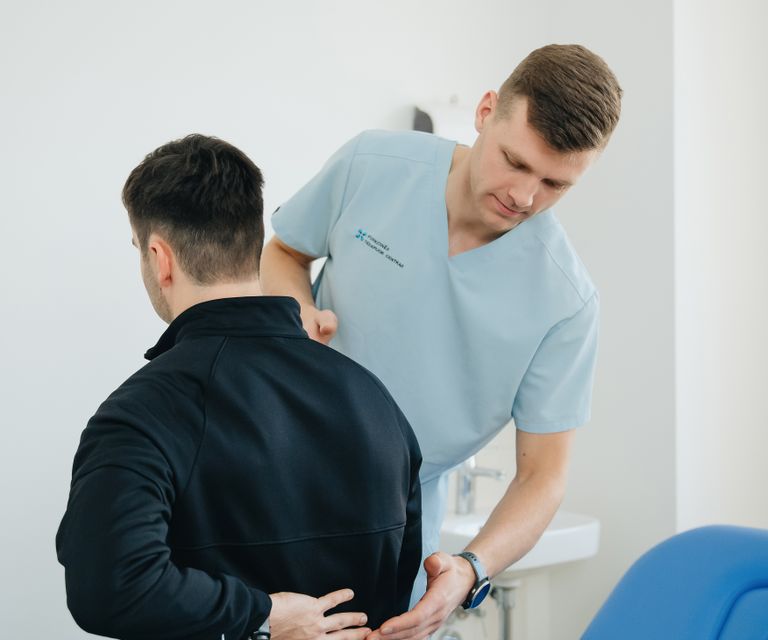
Dr. Pompliano asks how far you can walk, what stops you, and what position brings relief. The exam checks strength, reflexes, sensation, and balance.
An MRI shows exactly where the canal is narrowed and how tightly the nerves are compressed. He reviews the images with you and explains what the narrowing means for your symptoms.
Treatment is matched to your life, not just to the picture on the scan.
Your path to treatment.
Many people manage stenosis for years without surgery. Therapy, medication, and injections can keep symptoms in a livable range.
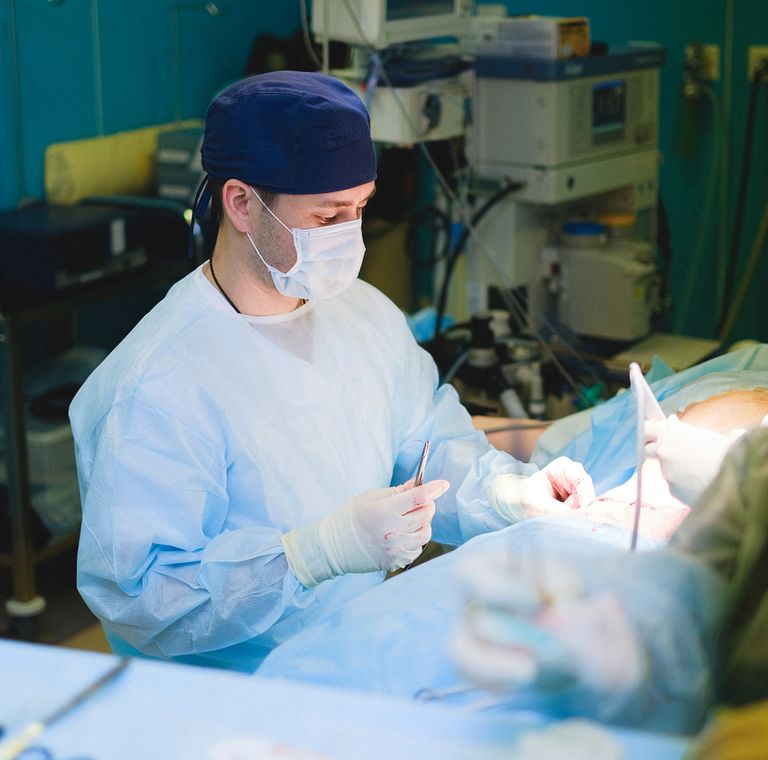
Surgery is considered when walking distance and independence keep shrinking despite that care. Decompression surgery opens the canal and takes pressure off the nerves, often with minimally invasive techniques.
Non-surgical options
- Physical therapy and flexion-based exercise
- Medication management
- Epidural steroid injections
- Activity pacing and walking aids when helpful
Surgical options when indicated
- Laminectomy (decompression)
- Minimally invasive decompression
- Fusion when the spine is unstable
- Decompression combined with fusion for spondylolisthesis
The right spine surgeon for stenosis.
Fellowship-trained. Conservative first. Focused on function.
Fellowship
Fellowship-trained in minimally invasive spine surgery at the San Diego Spine Foundation.
Philosophy
Surgery is recommended only after non-surgical care has had a fair chance.
Stenosis expertise
Trained in open and minimally invasive decompression of the spinal canal.
Integrated care
Practices with Columbia Orthopaedic Group, with imaging and pain management in the same group.
Why Patients Trust Dr. Pompliano
[Patient testimonial: Dr. Pompliano to supply]
[Attribution placeholder]
[Patient testimonial: Dr. Pompliano to supply]
[Attribution placeholder]
[Patient testimonial: Dr. Pompliano to supply]
[Attribution placeholder]
Legs slowing you down?
Schedule an evaluation to find the cause of your symptoms and learn your options.
The first step is a conversation.
Request ConsultationPrefer to call? (XXX) XXX-XXXX
Accepting new patients · Second opinions welcome