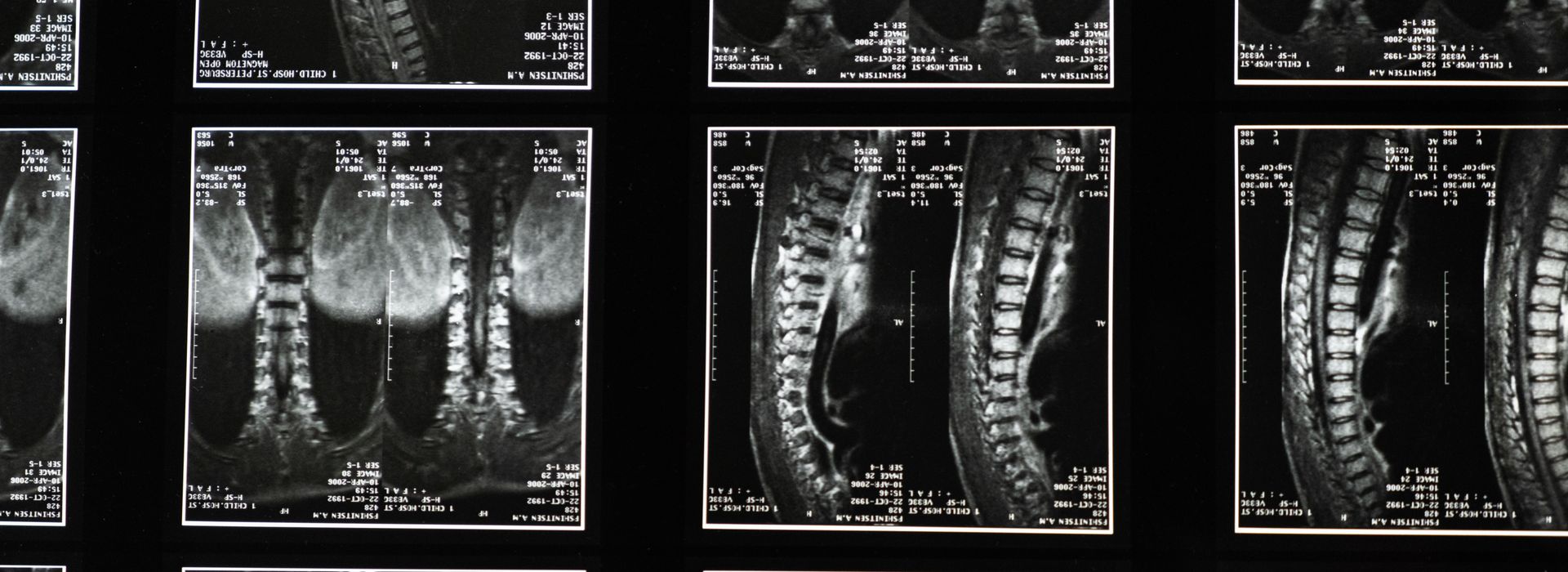
Disc Conditions
Discs are the cushions between the bones of your spine. When one wears down or herniates, it can press on nearby nerves and cause real pain.
Schedule EvaluationUnderstanding disc problems.
Each disc has a tough outer ring and a soft center. A herniated disc happens when the soft center pushes through the outer ring. Degenerative disc disease is different: the disc dries out and thins with age and wear.
Where you feel it depends on where the disc is. A disc problem in the neck can send pain, numbness, or weakness into the arm. A disc problem in the lower back can send it into the leg.
Common symptoms
- Neck or back pain near the affected disc
- Pain that travels into the arm or leg
- Numbness or tingling
- Weakness with grip or walking
- Flare-ups after activity or long sitting
- Stiffness and lost flexibility
Common disc conditions.
Disc problems come in a few forms, and they respond to different treatments. An exact diagnosis comes first.
Conditions that can be responsible
- Herniated disc
- Bulging disc
- Degenerative disc disease
- Annular tears (tears in the outer ring)
- Disc-related pinched nerves
When rest is not enough.
Many disc herniations heal on their own over weeks to a few months. Evaluation makes sense when symptoms hang on, get worse, or involve the arm or leg.
A new change in bladder or bowel control needs medical attention right away.
Schedule a spine evaluation →Consider evaluation if
- Pain has lasted more than four to six weeks
- Arm or leg pain, numbness, or tingling
- Weakness in the arm, hand, leg, or foot
- Pain keeps returning with activity
- Symptoms are not improving with conservative care
- Any new change in bladder or bowel control
An early answer gives you more options.
How Dr. Pompliano evaluates your condition.
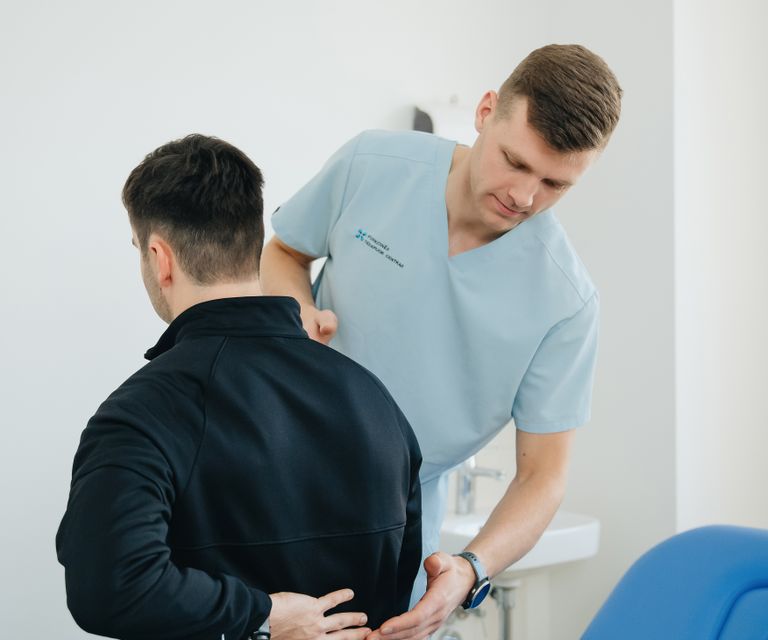
Dr. Pompliano matches your symptoms to your anatomy. The exam tests the specific nerves a disc could be pressing on. An MRI shows the discs directly and confirms which level is responsible.
Not every disc that looks worn on a scan is the source of pain. He is careful to treat the disc that is actually causing your symptoms, not just the one that shows up on the image.
The scan matters. Matching the scan to your symptoms matters more.
Your path to treatment.
Most disc problems improve with non-surgical care while the body heals. Therapy, medication, and injections control pain during that window.
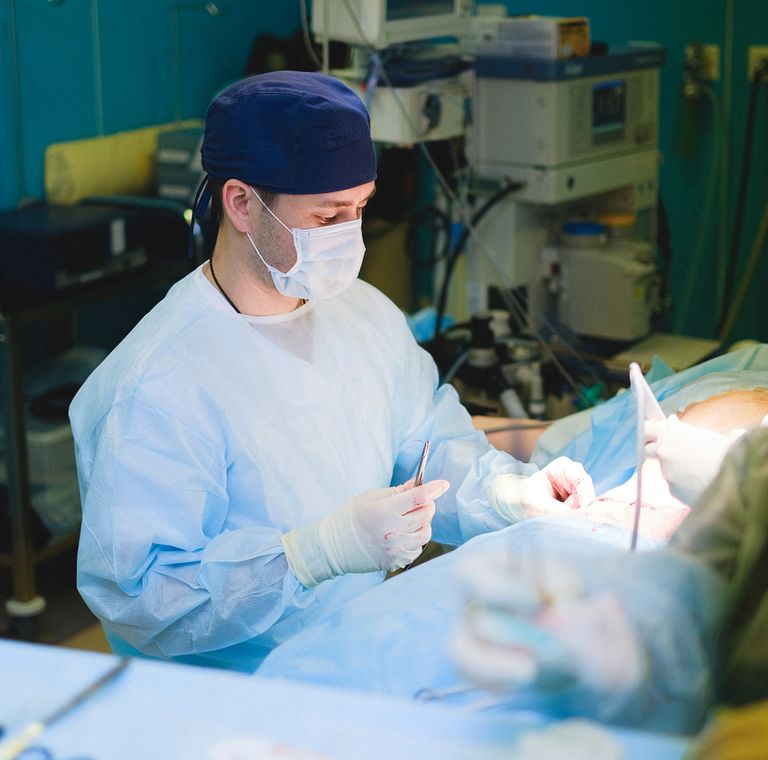
When surgery is needed, Dr. Pompliano has a special interest in motion-sparing options. For the right patients, artificial disc replacement removes the damaged disc and keeps the spine moving, instead of fusing it.
Non-surgical options
- Physical therapy and strengthening
- Anti-inflammatory and nerve pain medication
- Epidural steroid injections
- Activity changes while healing
Surgical options when indicated
- Artificial disc replacement (cervical or lumbar, in select patients)
- Microdiscectomy
- Fusion when stability requires it
- Minimally invasive approaches
The right spine surgeon for disc conditions.
Fellowship-trained. Conservative first. Focused on function.
Fellowship
Fellowship-trained in minimally invasive spine surgery at the San Diego Spine Foundation.
Philosophy
Surgery is recommended only after non-surgical care has had a fair chance.
Motion preservation
A special focus on artificial disc replacement when it fits the patient.
Integrated care
Practices with Columbia Orthopaedic Group, with imaging and pain management in the same group.
Why Patients Trust Dr. Pompliano
[Patient testimonial: Dr. Pompliano to supply]
[Attribution placeholder]
[Patient testimonial: Dr. Pompliano to supply]
[Attribution placeholder]
[Patient testimonial: Dr. Pompliano to supply]
[Attribution placeholder]
Think a disc may be the problem?
Schedule an evaluation to find the cause of your symptoms and learn your options.
The first step is a conversation.
Request ConsultationPrefer to call? (XXX) XXX-XXXX
Accepting new patients · Second opinions welcome